

©YesICannes.com
The Cannes Film Festival has presented Andrei Zvyagintsev’s Minotaur and Pedro Almodóvar’s Amarga Navidad.
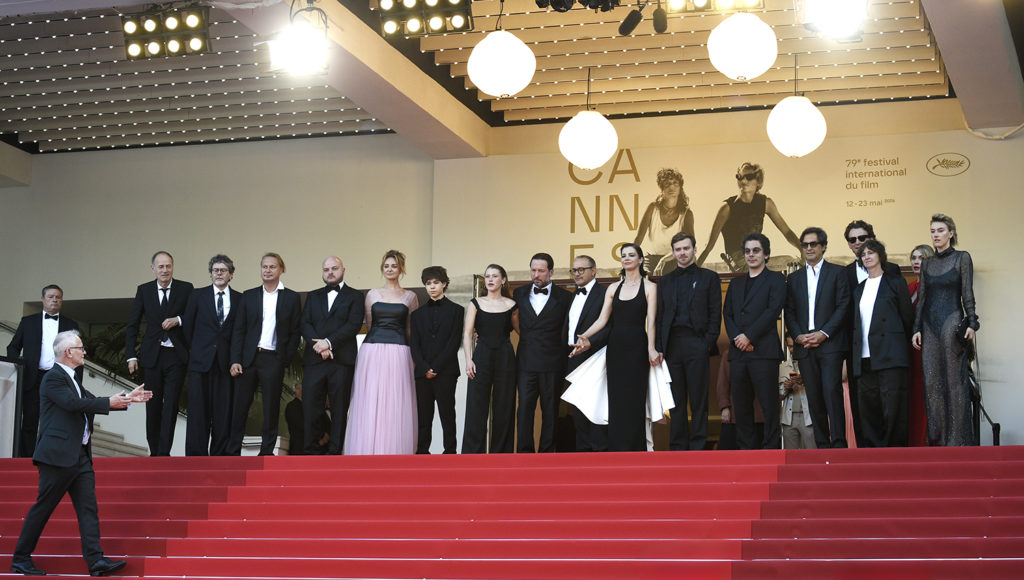
Minotaur : For the seventh day of the competition, the 2026 Cannes Film Festival saw the entry of Minotaur, the latest feature from Russian director Andrei Zvyagintsev (winner of the Best Screenplay award in 2014 for Leviathan). This marks his grand return to Cannes nine years after Loveless, which won the Jury Prize in 2017. Also presented was Amarga Navidad (Autofiction) by a festival regular: the celebrated Spanish director Pedro Almodóvar, returning to the Croisette after Julieta (2016), Pain and Glory (2019), and Strange Way of Life (2023).
Minotaur ©DR
Andrei Zvyagintsev’s Minotaur
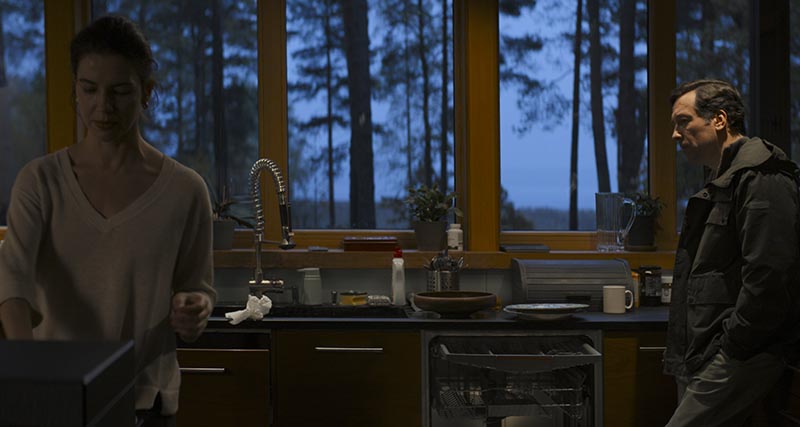
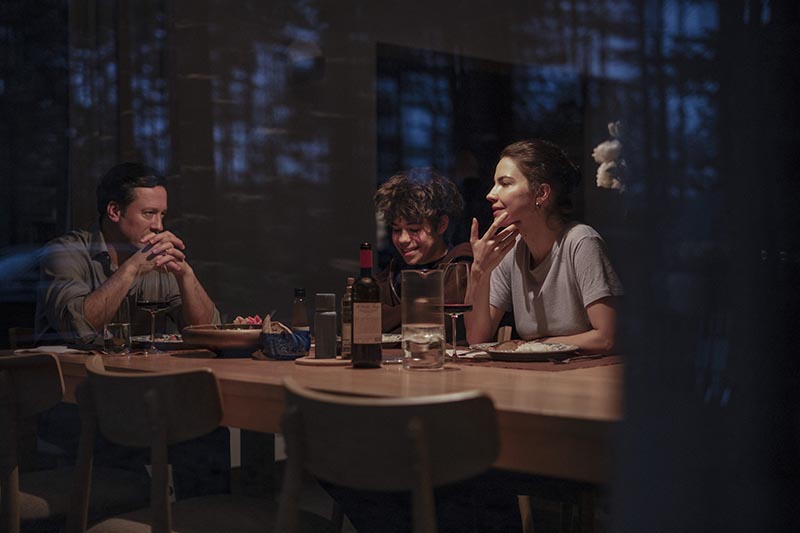
On the Croisette, some comebacks feel like silent earthquakes. Nine years after Loveless, Russian filmmaker Andrei Zvyagintsev returns to the Official Competition with Minotaur, a suffocating chronicle of a man consumed by the brutality of his era. From the first screenings in Cannes, the film established itself as one of the darkest and most discussed works of the 2026 edition. In a Russian provincial city, Gleb (Dmitriy Mazurov), a successful entrepreneur with an impeccable exterior, watches his existence methodically fracture: the invasion of Ukraine disrupts his business, his employees flee to the West, and the mobilization imposed by the authorities turns his daily life into a field of tension. Zvyagintsev films this intimate shipwreck with clinical coldness, allowing a muffled violence to rise even in the most ordinary gestures.
©DR
The Croisette as a Tragic Labyrinth
Minotaur extends far beyond a marital drama or a portrait of a man in crisis. Beneath the surface of a domestic tragedy, the director composes a chilling X-ray of a Russian society adrift in moral decay. When Gleb discovers the infidelity of his wife, Galina (Iris Lebedeva), his personal collapse merges with that of a country trapped in paranoia and administrative brutality. Cannes is reunited with the implacable gaze that made Zvyagintsev one of the great contemporary moralists of European cinema. In the halls of the Palais, many are already describing a film “with no escape,” where every silence weighs more heavily than outbursts of anger. With his austere direction, suffocating framing, and total rejection of the spectacular, Zvyagintsev transforms the Croisette into a tragic labyrinth, where, in the end, the monster is anything but mythological.
©YesICannes.com
Pedro Almodóvar: Autofiction in Chromatic Vertigo
With Amarga Navidad, presented in the Official Competition at the Cannes Film Festival, Pedro Almodóvar continues his exploration of the porous boundaries between memory, desire, and creation. After Julieta, Pain and Glory, and the melancholic western Strange Way of Life, the Spanish filmmaker delivers a work of rare visual sophistication where autofiction becomes an emotional battlefield. At the center of the story, Raúl Rossetti, a cult director paralyzed by a creative crisis, decides to turn the tragedy experienced by his longtime assistant into cinema. Gradually, the character of Elsa—another director imagined by Raúl—ends up reflecting his own inner vertigo. Identities blur, narratives contaminate one another, and fiction acts as a machine designed to unveil the most intimate betrayals. Faithful to his obsession with cinema as a distorting mirror of reality, Almodóvar questions the violence hidden behind every artistic gesture: how far can one go in using the lives of others to fuel one’s own work?
Amarga natividad ©DR
Color as a Language of Power and Guilt
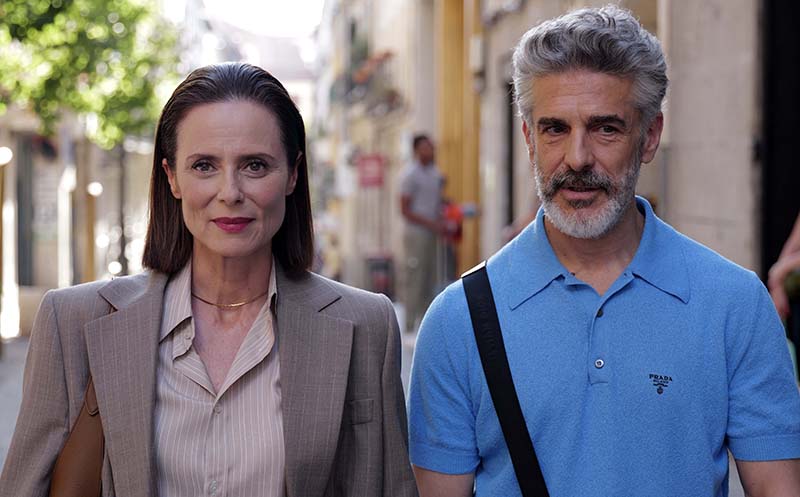
In Pedro Almodóvar’s films, color is never merely decorative. In Amarga Navidad, it becomes almost a moral system. Raúl moves through mustard, golden, and amber shades that define a world closed in on itself, saturated with narcissism and control. Then comes the moment when everything tips: when Mónica, played by Aitana Sánchez-Gijón, confronts the man who pillaged her pain to feed his screenplay, she appears dressed in the same hues as him, as if she were brutally holding up a mirror to his own image. Clothing becomes a silent accusation. This circulation of colors between the characters acts as an emotional contagion. In Cannes, many see this film as one of Almodóvar’s most radical aesthetic gestures since Bad Education. The director seems to paint each scene like an expressionist canvas where pigments replace dialogue. The cold blue of a polo shirt signals a breakup before it is even articulated; black and gold become the signs of wavering power. More than ever, Almodóvar films emotions as visible substances.
©DR
Lanzarote: Between Black Lava and Inner Rebirth
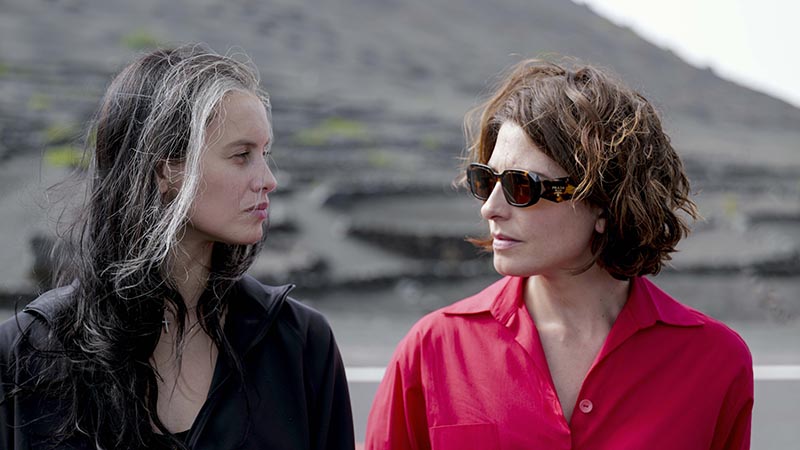
The secret heart of the film, however, lies far from Madrid, in the volcanic landscapes of Lanzarote. In this white house, inspired by the architectural universe of César Manrique, Elsa – played by Bárbara Lennie – attempts to relearn how to write and how to inhabit her own pain. The contrast with Raúl’s saturated interiors is striking: here, the white breathes, and the silence becomes almost therapeutic. Rising from the black lava lands is one of the film’s most powerful images: Elsa’s vermilion dress crossing the funeral black worn by Natalia, played by Milena Smit. Two women, two ways of surviving grief, opposed solely by their colors. This scene summarizes the entire power of Amarga Navidad: in Almodóvar’s world, emotions literally change the visible world. The film is already appearing as a dizzying reflection on contemporary creation, but also as the intimate confession of a filmmaker who continues, at 76, to transform his own wounds into shards of incandescent cinema.
©YesICannes.com
©YesICannes.com

©YesICannes.com

©YesICannes.com

©YesICannes.com
©YesICannes.com
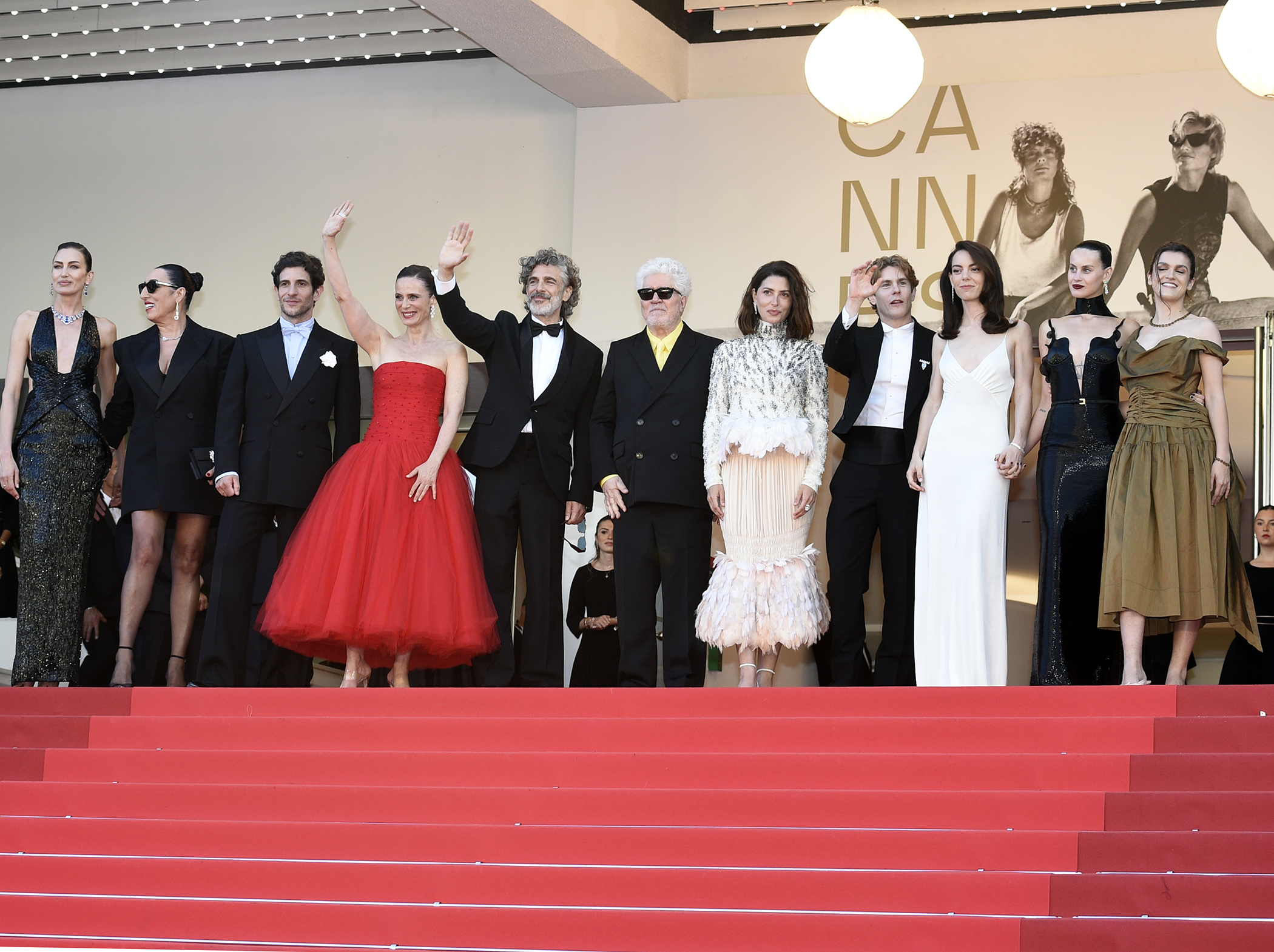
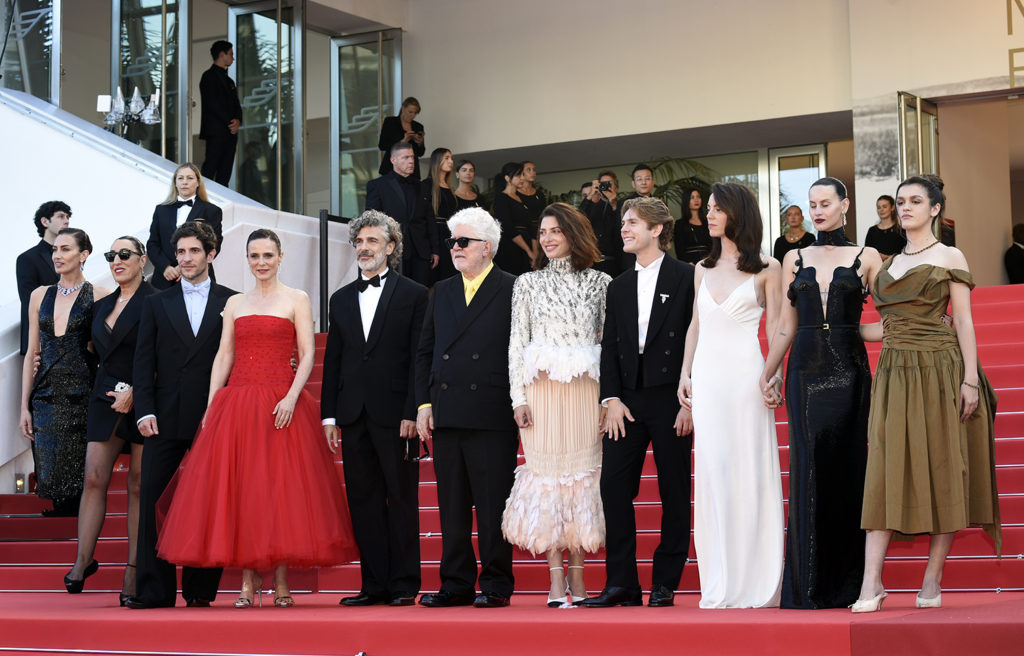
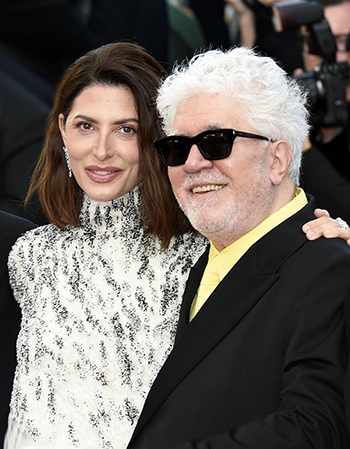
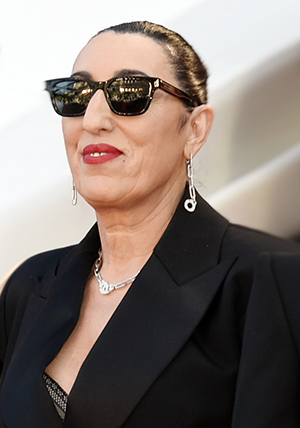
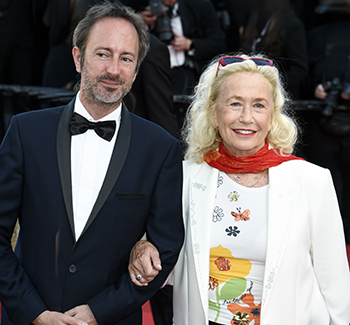
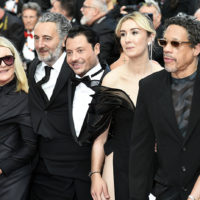
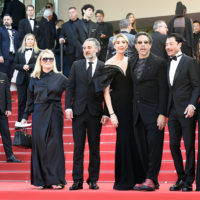
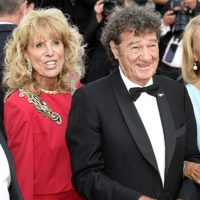
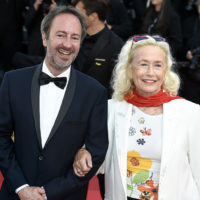
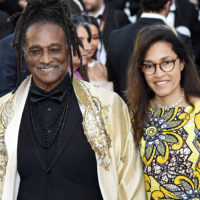
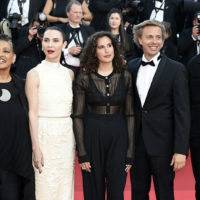
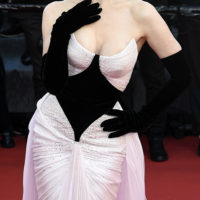
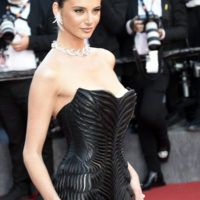
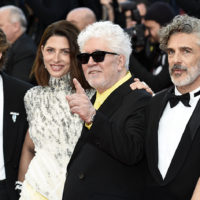
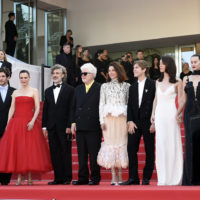
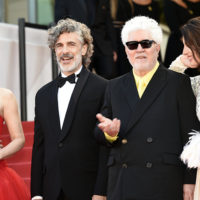
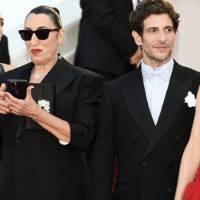
The “Montée des Marches” (Red Carpet) for Amarga Navidad
Click to enlarge – ©YesICannes.com – All rights reserved




































































































Recent Comments